

 Facebook
 X
X
 Pinterest
 Copy Link
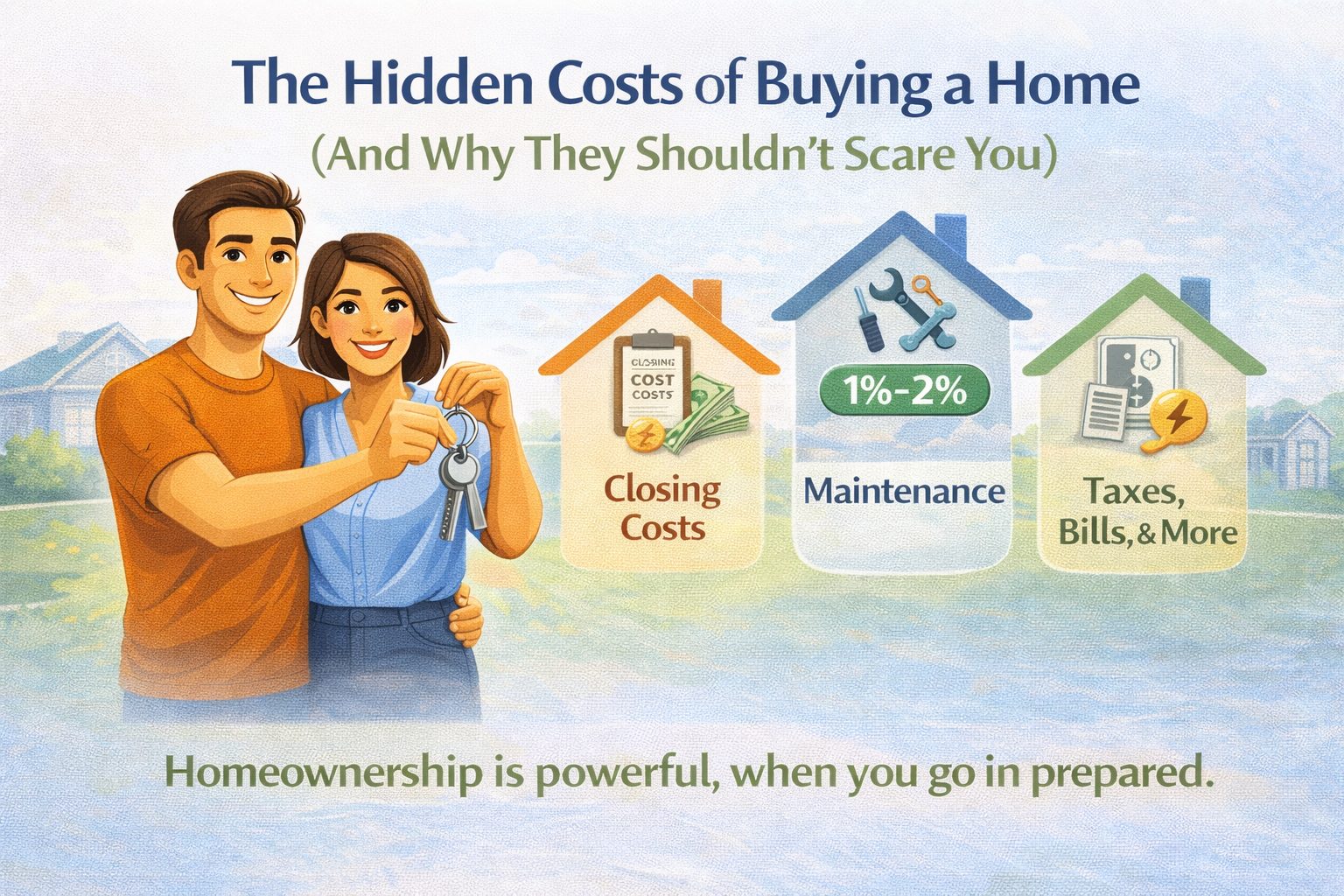
Buying a home is one of the most powerful financial moves you can make.
It’s how families build stability.
It’s how wealth is created over time.
It’s how you stop paying someone else’s mortgage and start investing in your own future.
But here’s the truth most people don’t talk about:
The purchase price isn’t the full picture.
And that’s not bad news — it’s just smart to understand what comes with ownership so you walk in confident and prepared.
Let’s break it down the right way.
1. Closing Costs — Plan for the Finish Line
Beyond your down payment, most buyers will pay closing costs — typically 2%–5% of the purchase price.
On a $350,000 home, that’s roughly:
-
$7,000–$17,500
These costs include things like:
-
Loan fees
-
Appraisal
-
Title insurance
-
Prepaid taxes and insurance
The key?
When you know they’re coming, they’re not stressful. They’re just part of the strategy.
2. Maintenance — The Trade-Off for Control
When you own a home, you gain control — but you also gain responsibility.
A common guideline is budgeting 1%–2% of the home’s value per year for maintenance.
On a $400,000 home, that’s:
-
$4,000–$8,000 annually
Some years will be minimal.
Other years might include bigger upgrades.
The difference? You’re improving something you own.
3. Property Taxes & Insurance
Taxes and insurance can adjust over time, especially after a purchase.
This isn’t a surprise cost — it’s just something to review carefully before you buy so your monthly payment fits comfortably within your lifestyle.
Preparation equals peace of mind.
4. Utilities & Lifestyle Costs
A larger space may mean:
-
Higher utilities
-
Lawn care or snow removal
-
HOA fees
But it also means:
-
Space for your family
-
Privacy
-
Stability
-
Freedom to personalize
There’s value beyond numbers.
The Real Advantage of Buying
Here’s what renters don’t get:
-
Long-term equity growth
-
Protection against rising rents
-
Appreciation over time
-
Tax advantages (in many cases)
When done wisely, homeownership isn’t a burden — it’s leverage.
Bottom Line
Buying a home isn’t about stretching to your limit.
It’s about buying smart.
The goal isn’t just to get keys.
It’s to feel secure, confident, and positioned for the future.
When you understand the full picture, you’re not walking into a risk — you’re stepping into opportunity with clarity.
And that’s how real estate should feel.
