

 Facebook
 X
X
 Pinterest
 Copy Link
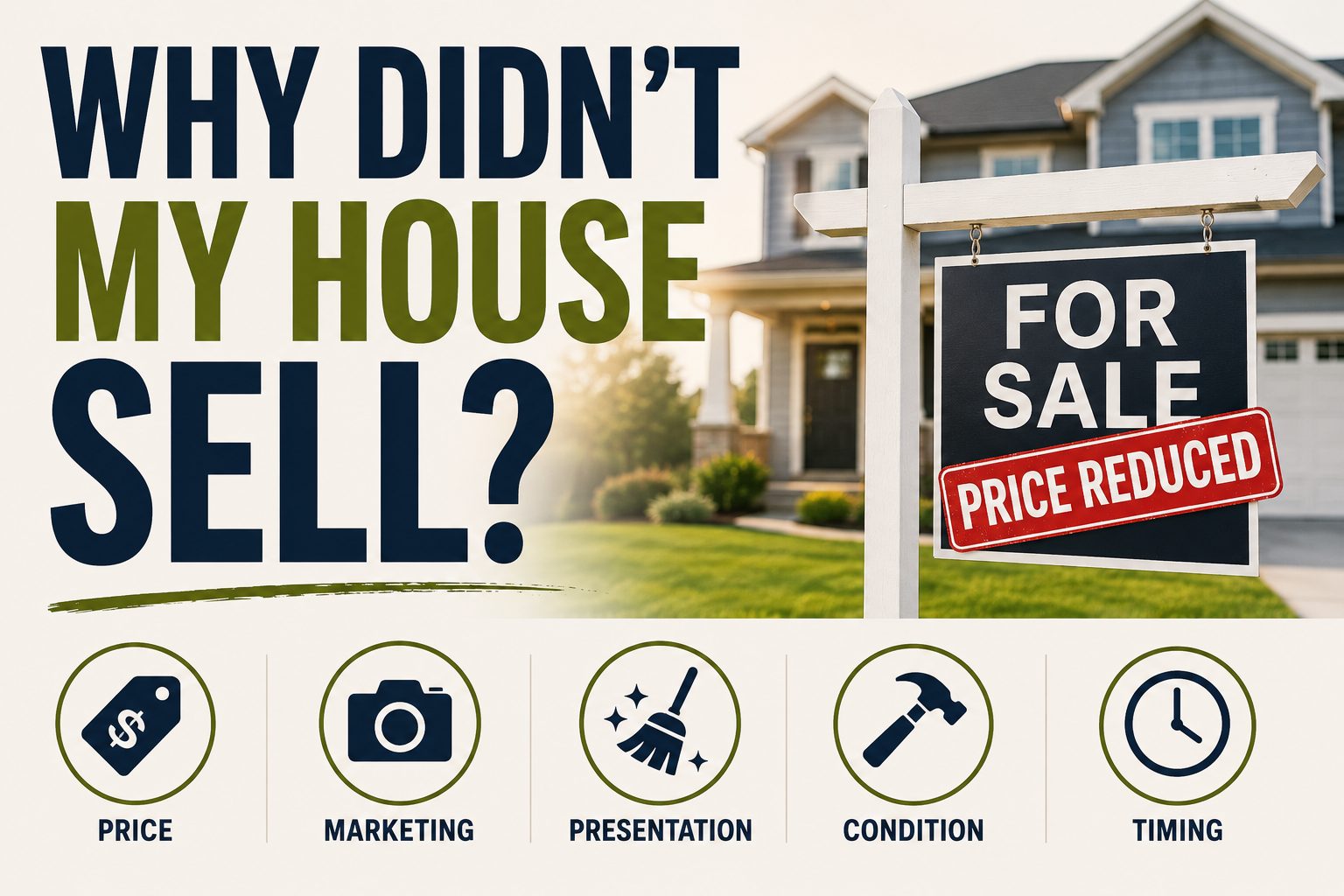
Understanding the Most Common Reasons a Home Doesn’t Sell
If your home didn’t sell the first time, you’re not alone.
Every year, thousands of homes come off the market without selling.
That doesn’t necessarily mean there was something wrong with the home.
More often than not, it means something in the selling strategy didn’t line up with what buyers were looking for.
The good news?
Many of the reasons a home doesn’t sell can be identified and corrected.
Let’s look at some of the most common ones.
Pricing
Price is one of the biggest factors in whether a home sells.
Even a beautiful home can struggle to attract buyers if it’s priced above what the market is willing to pay.
Buyers compare your home to every other home available—not just the ones that have already sold.
The right price creates interest.
The wrong price can cause buyers to move on before they ever schedule a showing.
Presentation
First impressions matter.
A clean, well-maintained home feels more inviting than one that is cluttered or difficult to picture living in.
Simple things like cleaning, decluttering, improving curb appeal, and letting in natural light can have a significant impact.
You don’t need a perfect home.
You just want buyers to focus on the home’s strengths instead of its distractions.
Condition
Every home has imperfections.
Buyers understand that.
But obvious deferred maintenance can cause buyers to wonder what else may have been overlooked.
Taking care of smaller repairs before listing can build buyer confidence and make a home feel better maintained.
Marketing
Today’s buyers usually see your home online before they ever see it in person.
If the photos don’t stand out, the description doesn’t tell the home’s story, or the marketing doesn’t reach enough buyers, opportunities can be missed.
Great marketing doesn’t sell every home.
But poor marketing can prevent buyers from ever giving your home a chance.
Showing Availability
Sometimes buyers want to see a home on short notice.
If showings are difficult to schedule or unavailable during evenings and weekends, some buyers simply move on to the next property.
The easier it is to see your home, the more opportunities you create.
Competition
Your home isn’t competing against homes that sold last year.
It’s competing against the homes buyers can purchase today.
If another home nearby offers a better location, more updates, or a more competitive price, buyers will naturally compare the two.
Understanding the competition is an important part of developing the right strategy.
Timing
Sometimes timing plays a role.
Changes in inventory, buyer demand, interest rates, or local market conditions can all influence how quickly a home sells.
While no one can control the market, understanding current conditions can help set realistic expectations.
It Isn’t Always Just One Thing
One of the biggest misconceptions is that a home fails to sell because of one major problem.
In reality, it’s often several smaller factors working together.
Maybe the price was just a little high.
The photos didn’t stand out.
The home needed a few small repairs.
Showings were limited.
Individually, those issues may not seem significant.
Together, they can make a big difference.
Bottom Line
If your home didn’t sell, don’t assume it’s because there’s something wrong with your house.
More often, it’s about finding the right combination of pricing, preparation, presentation, marketing, and timing.
Sometimes a few small adjustments are all it takes to attract the right buyer.
Every home has a story.
The goal is making sure the right buyers have the opportunity to see it.
