

 Facebook
 X
X
 Pinterest
 Copy Link
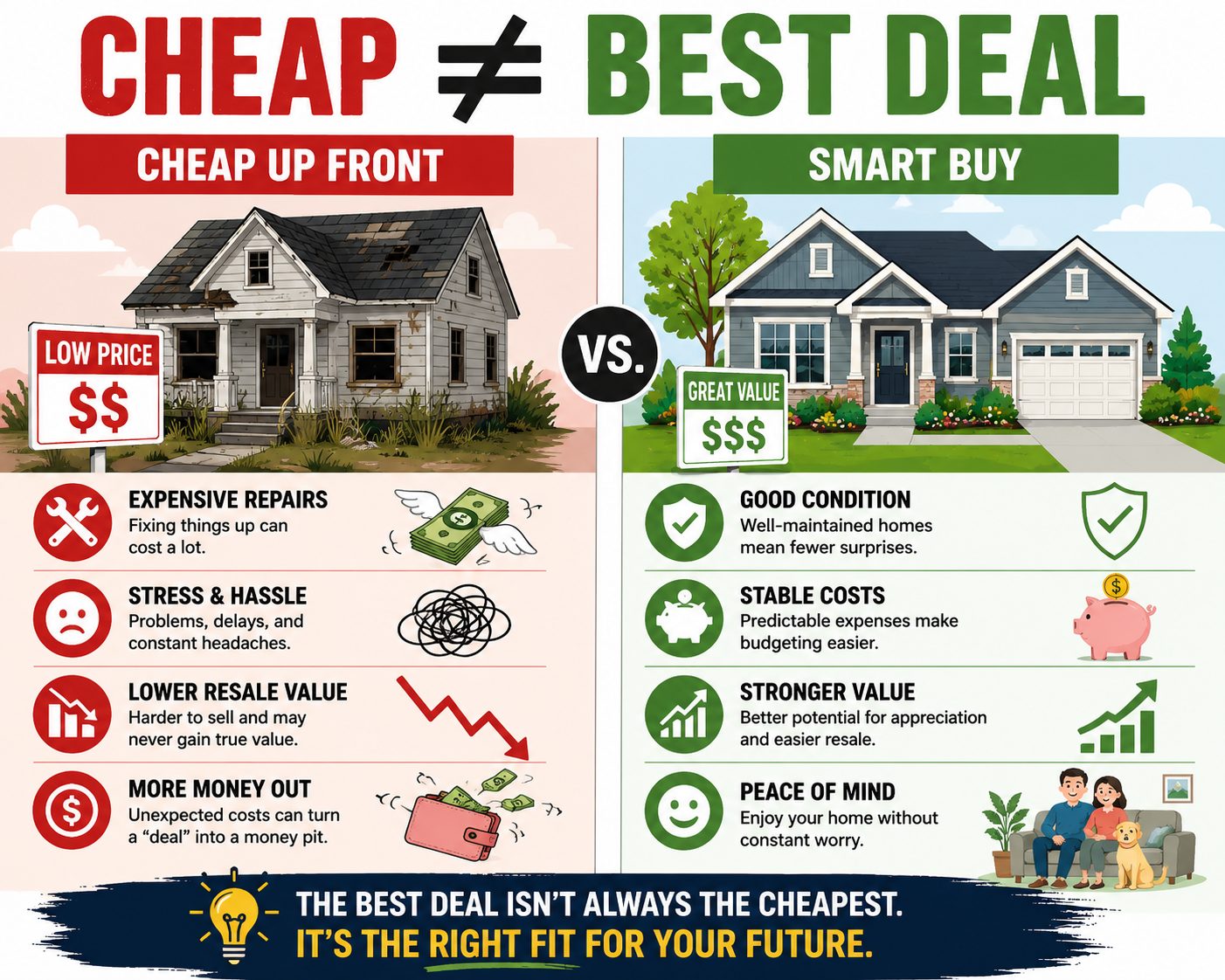
The Hidden Costs Buyers Don’t Always See
Finding a lower-priced home can feel like a win.
And sometimes it is.
But price alone doesn’t determine whether a home is actually a good deal.
In real estate, the cheapest option can sometimes become the most expensive one later.
Let’s talk about why.
Lower Price Doesn’t Always Mean Lower Cost
A home priced below similar properties usually has a reason.
Sometimes it’s minor.
Other times, it’s hiding:
- Deferred maintenance
- Major repairs
- Layout issues
- Location concerns
- Expensive system updates
The purchase price is just the beginning.
Repairs Add Up Quickly
A home that seems like a bargain can become expensive fast if it needs:
- Roof replacement
- HVAC updates
- Foundation work
- Plumbing or electrical repairs
Many buyers focus on:
“Can I afford the purchase price?”
Instead of:
“Can I afford the home after I buy it?”
That difference matters.
Layout & Location Matter More Than People Think
Two homes may have similar square footage — but feel completely different.
Things buyers often overlook:
- Busy roads
- Awkward floorplans
- Tiny bedrooms
- Limited storage
- Poor resale appeal
A lower price doesn’t always compensate for long-term compromises.
Cheap Can Cost More Later
Some homes stay cheaper because:
- They’re harder to resell
- Buyers consistently avoid them
- The issues affect long-term value
That doesn’t mean you should avoid every fixer-upper.
It just means you should understand why the price is lower.
The Best Deal Is Usually Balanced
The smartest purchases often aren’t:
- The cheapest
- Or the most expensive
They’re the homes that offer:
- Solid condition
- Good layout
- Strong location
- Long-term usability
That combination creates value.
Emotion vs. Strategy
Sometimes buyers get excited because:
“It’s cheaper than everything else!”
But smart buying isn’t about chasing the lowest number.
It’s about understanding:
- Total cost
- Future maintenance
- Resale potential
- Overall fit for your life
Bottom Line
The cheapest house isn’t always the best deal.
And the best deal isn’t always the cheapest house.
A smart purchase balances:
- Price
- Condition
- Location
- Long-term value
Because what matters most isn’t just what you spend today.
It’s how the home performs for you over time.
