Uncategorized January 18, 2026

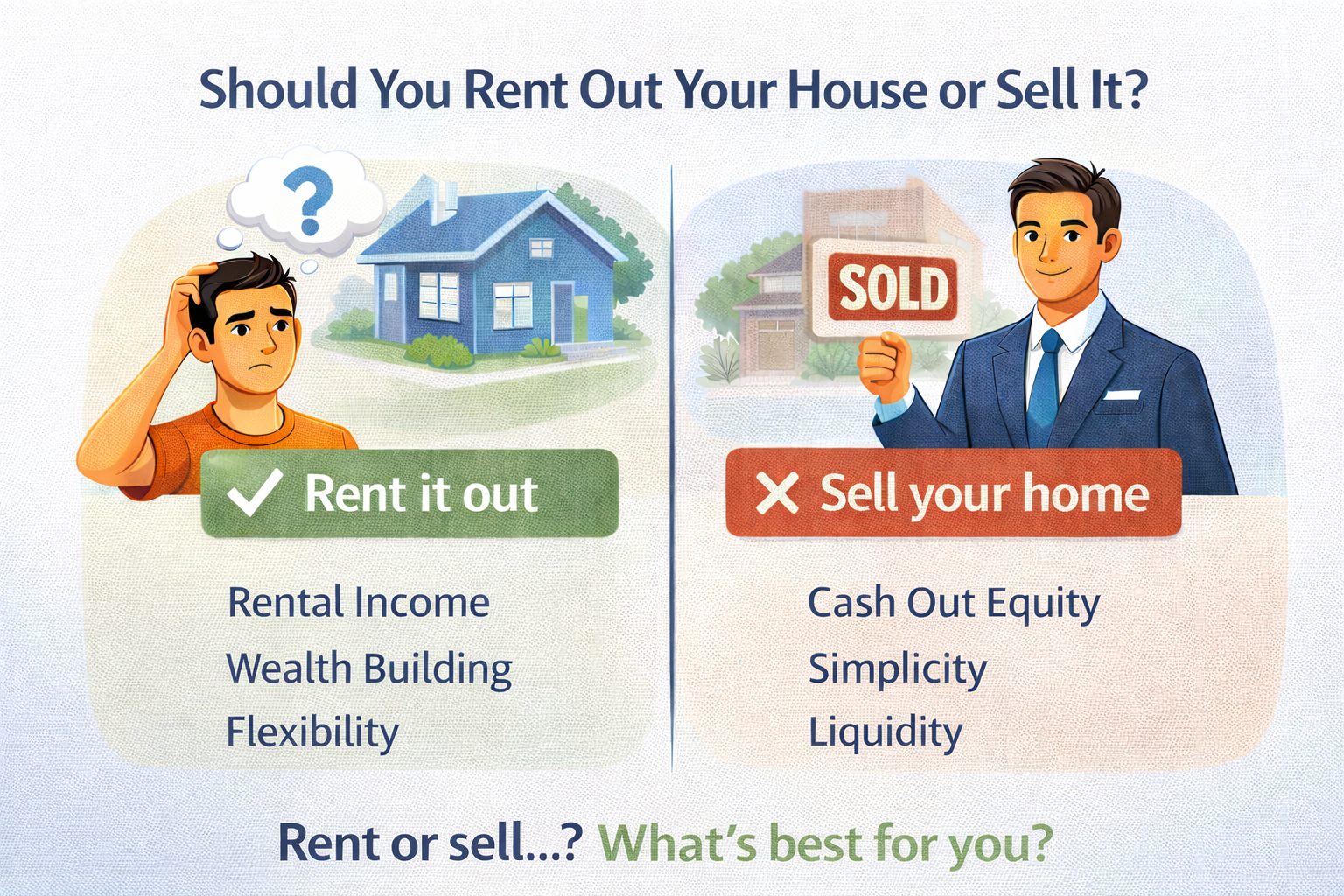
Should You Rent Out Your House or Sell It?

How to Decide What Makes the Most Sense for You

If you’re moving, upgrading, downsizing, or relocating, one big question often comes up:

Should I rent my house out… or just sell it?

There’s no one-size-fits-all answer. The right move depends on your goals, finances, and how much responsibility you want long-term. Let’s break it down in a practical, real-world way.


When Renting Your Home Can Make Sense

Renting can be a smart move — if the numbers and your lifestyle support it.

✅ You May Want to Rent If:

1. You Can Cash Flow (or Break Even)
If rent covers:

  • Mortgage

  • Taxes & insurance

  • Maintenance

  • Vacancy buffer

…and ideally leaves monthly profit, renting becomes a wealth-building tool.

2. You Plan to Move Back Someday
Renting allows you to keep the home while you’re temporarily away — especially helpful for job relocations or short-term moves.

3. You Want Long-Term Appreciation
Holding property over time can build equity and hedge against inflation.

4. You’re Comfortable Being a Landlord (or Hiring One)
Tenants, repairs, late-night calls — it’s manageable, but it’s not passive unless you outsource.


When Selling Often Makes More Sense

Selling can be the smarter, less stressful option — especially if you want flexibility or liquidity.

🚩 Selling Is Often Better If:

1. You Have Significant Equity
Selling can free up cash for:

  • A larger down payment

  • Eliminating debt

  • Investing elsewhere

2. The Rental Numbers Don’t Work
If rent won’t realistically cover expenses, you could be paying out-of-pocket every month.

3. You Don’t Want the Responsibility
Landlording comes with:

  • Maintenance

  • Legal compliance

  • Tenant risk

Not everyone wants that — and that’s okay.

4. You’re Near a Market Peak
In strong seller markets, locking in today’s value can reduce future risk.


The Hidden Costs Many Homeowners Miss

Before deciding, make sure you factor in:

  • Maintenance (1–2% of home value per year is common)

  • Vacancy periods

  • Property management fees (typically ~8–10%)

  • Capital gains taxes if you rent too long before selling

  • Wear and tear beyond normal homeownership


The Best Way to Decide

Ask yourself:

  • Do I want monthly income or lump-sum cash?

  • Am I comfortable with risk and responsibility?

  • What supports my next life move best?

Sometimes the best answer isn’t renting or selling — it’s understanding both options clearly and choosing intentionally.


Bottom Line

Renting can build wealth over time.
Selling can simplify life and unlock opportunity.

The right choice depends on your goals, your market, and your tolerance for involvement — not just what the internet says.

If you want help running the numbers or understanding what your home could realistically rent or sell for, that’s a conversation worth having before making a move.

Uncategorized January 11, 2026

What Online Home Estimates Get Wrong — And How to Use Them Correctly

Online home value estimators have become go-to tools for both buyers and sellers. They’re fast, free, and easy to access — but they also come with important limitations that many homeowners don’t realize. Understanding what these tools do well — and where they fall short — can help you make smarter decisions.


What Are Online Home Value Estimates?

Websites like Zillow and Redfin use automated valuation models (AVMs) — algorithms that crunch data from public records, recent sales, tax assessments, and other available information — to predict what a home might be worth. These models are useful as starting points, but they’re just estimates — not professional appraisals or official offers.


How Accurate Are These Estimates?

1. Heartening Accuracy for On-Market Homes

When a property is actively listed for sale, online estimators have access to up-to-date MLS information, including professional photos, detailed descriptions, and pricing trends. In that scenario, the estimates tend to be much closer to actual sale prices.

For example, data compiled across national home sales shows that for on-market listings:

  • Zillow’s Zestimate has a median error rate of about 1.94%. That means half of all Zestimate values are within roughly 1.94% of what the home ultimately sells for.

  • Redfin’s estimate performs similarly, with a median error rate near 1.98%.

These numbers sound encouraging — when a home is listed, algorithms have lots of current, accurate data to work with. But it’s important to note: those figures apply only once a home is already on the market.


2. Big Gaps When a Home Isn’t Listed

When a home is off the market — such as when a homeowner just wants a rough idea of its value — the accuracy declines sharply.

For off-market homes:

  • Zillow’s median error rate increases to around 7.06%.

  • Redfin’s estimate rises to about 7.72%.

What does that mean in real dollars?

  • On a $400,000 home, a 7% median error could mean the estimate is off by ±$28,000 or more.

  • On a $600,000 home, that margin can exceed $40,000.

And these are median statistics — meaning half of the time the estimate could be even farther from the actual value. That’s why many homeowners are surprised when their online estimate differs significantly from what their home actually sells for.


Why These Estimates Miss the Mark

Here are some of the biggest reasons:

1. They Can’t See Condition or Upgrades

Algorithms assume homes are in “average” condition based on public records. But a remodeled kitchen, finished basement, or new roof often won’t show up in the data unless a human uploads that information. That means AVMs can seriously under- or over-value a home.

2. Outdated or Incomplete Data

Public records aren’t always current. Renovations that weren’t permitted won’t appear in tax data, and some databases lag behind real market conditions. If the algorithm doesn’t have accurate details, its estimate won’t be accurate either.

3. Rapid Market Changes Lag Behind Algorithms

These models are backward-looking, meaning they rely on past sales to predict value. In fast-changing markets, that backward look can make estimates feel out of date by weeks or months.

4. Neighborhood Nuances Are Hard to Quantify

Two homes that are identical on paper can sell for very different prices due to things like street noise, view, lot shape, or school district. Algorithms don’t always capture those subtleties well.


So What Should You Do Instead?

Online estimates certainly have value — especially for early research — but they shouldn’t dictate serious financial decisions.

✔ Use Them as a Starting Point

They’re great for getting a ballpark range of what similar homes in your area are worth.

✔ Check Multiple Sources

Compare values from Zillow, Redfin, Realtor.com, county tax assessments, and other tools. If several estimates line up, that range might be more reliable than any single estimate on its own.

✔ Talk to a Local Expert

A professional real estate agent can prepare a Comparative Market Analysis (CMA) tailored to your neighborhood — considering upgrades, condition, and local demand — something no algorithm can do with the same precision.


Bottom Line

Online value estimators like Zillow’s Zestimate and Redfin’s Estimate are useful tools — but they’re tools, not truths. Accuracy varies widely depending on whether your home is listed, how much data is available, and local market conditions. For most homeowners, these tools should be a first step — not the final word — in understanding their home’s worth.

When you combine online estimates with professional insight and up-to-date market data, you’ll be in the best position to make confident, informed decisions.

Uncategorized January 4, 2026

Is Now a Good Time to Buy or Sell? The Question You Should Be Asking Instead

One of the most common questions I hear is:
“Is now a good time to buy or sell?”

It’s a fair question—but it’s usually the wrong one.

The real estate market is constantly changing, and headlines often make it sound like there’s one universal “right time” that applies to everyone. In reality, the better question is much more personal—and far more helpful.


Why the “Good Time” Question Misses the Mark

When people ask if now is a good time to buy or sell, they’re usually reacting to:

  • Interest rates

  • Market headlines

  • What friends, family, or social media are saying

The problem?
Those factors don’t account for your goals, timeline, or financial situation.

What’s a great time for one person could be the wrong move for another.


The Better Question to Ask

Instead of asking “Is now a good time?” ask this:

“Does making a move now support my short-term and long-term goals?”

That single shift changes everything.


For Buyers: What Matters More Than the Market

Rather than trying to time the market perfectly, buyers should consider:

1. How Long Do You Plan to Stay?

Buying generally makes more sense the longer you plan to own the home. Time helps smooth out market fluctuations.

2. Payment Comfort, Not Price Fear

A home that fits your monthly comfort level matters more than guessing where rates or prices will go next.

3. Opportunity vs. Competition

In cooler or shifting markets, buyers often gain:

  • More negotiating power

  • More inspection flexibility

  • More time to make decisions

Those advantages don’t always exist in “hot” markets.


For Sellers: Timing Is Only Part of the Equation

Selling isn’t just about peak prices—it’s about strategy.

1. Your Next Move Matters

If you’re selling and buying again, the market affects both sides of the transaction.

2. Condition, Pricing, and Marketing Matter More Than Headlines

Homes that are priced correctly and marketed well still sell—even in uncertain markets.

3. Fewer Listings Can Mean More Attention

In slower seasons or cautious markets, serious buyers stand out more.


The Truth About Timing the Market

Very few people successfully time the top or bottom of the market—and most who try end up waiting too long.

Real estate success is usually built on:

  • Smart planning

  • Clear goals

  • Good advice

  • Long-term thinking

Not perfect timing.


So… Is Now a Good Time?

The honest answer is:
It depends—and that’s okay.

The right move isn’t about today’s headline. It’s about:

  • Where you are now

  • Where you want to be next

  • What makes sense financially and personally

That’s why I focus on conversations, not pressure. When you understand your options, the decision becomes much clearer.


Final Thought

You don’t need to commit to anything to explore whether now makes sense for you. Sometimes a simple conversation can help you:

  • Understand your position

  • See opportunities you hadn’t considered

  • Avoid costly mistakes

If you’re wondering whether a move now supports your goals, I’m always happy to talk it through—no obligation, just honest guidance.

Uncategorized December 28, 2025

Rent vs. Buy: The Real Costs Most People Forget to Compare

Most people compare monthly rent vs. monthly mortgage payment and stop there. But that comparison misses several important costs—and benefits—that can completely change the answer.

Let’s break down the real costs of renting vs. buying so you can make a confident, informed decision.

The True Cost of Renting

Renting often feels simpler—and in some cases, it is. But here’s what many renters don’t factor in:

1. Rent Increases

Rent typically goes up over time, sometimes significantly. While a mortgage payment can stay stable, rent almost never does.

2. Zero Equity

Every rent payment is gone once it’s paid. You’re covering housing costs, but you’re not building ownership or long-term value.

3. Limited Control

Want to paint, upgrade appliances, or make the space truly yours? Most rentals limit what you can do.

4. Missed Long-Term Opportunity

Many renters plan to buy “someday,” but rising prices and rates can make waiting more expensive than expected.

The True Cost of Buying (Beyond the Mortgage)

Buying a home does come with additional responsibilities, and it’s important to understand them upfront.

1. Upfront Costs

  • Down payment (which doesn’t always have to be 20%)
  • Closing costs
  • Inspections and appraisals

These are real costs—but many buyers are surprised to learn how many programs exist to help reduce them.

2. Maintenance & Repairs

Homeownership means budgeting for things like:

  • HVAC servicing
  • Roof or appliance repairs
  • General upkeep

A good rule of thumb is to set aside 1–2% of the home’s value per year for maintenance.

3. Property Taxes & Insurance

These are often included in your monthly payment, but they’re still costs to be aware of when planning.

What Buyers Often Forget to Count (The Upside)

This is where the comparison really changes.

1. Equity Growth

Every mortgage payment builds equity—money that stays tied to you, not a landlord. Over time, this can become one of your largest assets.

2. Appreciation

While markets fluctuate, real estate historically trends upward long term. That growth benefits homeowners, not renters.

3. Payment Stability

With a fixed-rate mortgage, your principal and interest payment stays the same—even while rent continues to rise.

4. Tax Advantages

Depending on your situation, homeowners may benefit from deductions related to mortgage interest and property taxes. (Always check with a tax professional.)

So… Which Is Better?

The right answer depends on:

  • How long you plan to stay in the home
  • Your financial comfort level
  • Your long-term goals

If you’re planning to move in a year or two, renting may make sense.
If you’re looking for stability, long-term growth, and control, buying often becomes the stronger option—even if the monthly payment is similar.

A Smarter Way to Decide

Instead of asking, “Is buying cheaper than renting?”
Ask this instead:

“Which option moves me closer to my long-term goals?”

That’s the conversation I like to have with clients—no pressure, no assumptions, just clear information so you can make the right choice for you.

Final Thought

You don’t need to be “perfectly ready” to explore your options. A simple conversation can help you understand:

  • What buying would actually cost
  • What programs are available
  • Whether renting or buying makes more sense right now

If you’re curious, I’m always happy to walk through the numbers and answer questions—before any commitments are made.


Uncategorized December 22, 2025

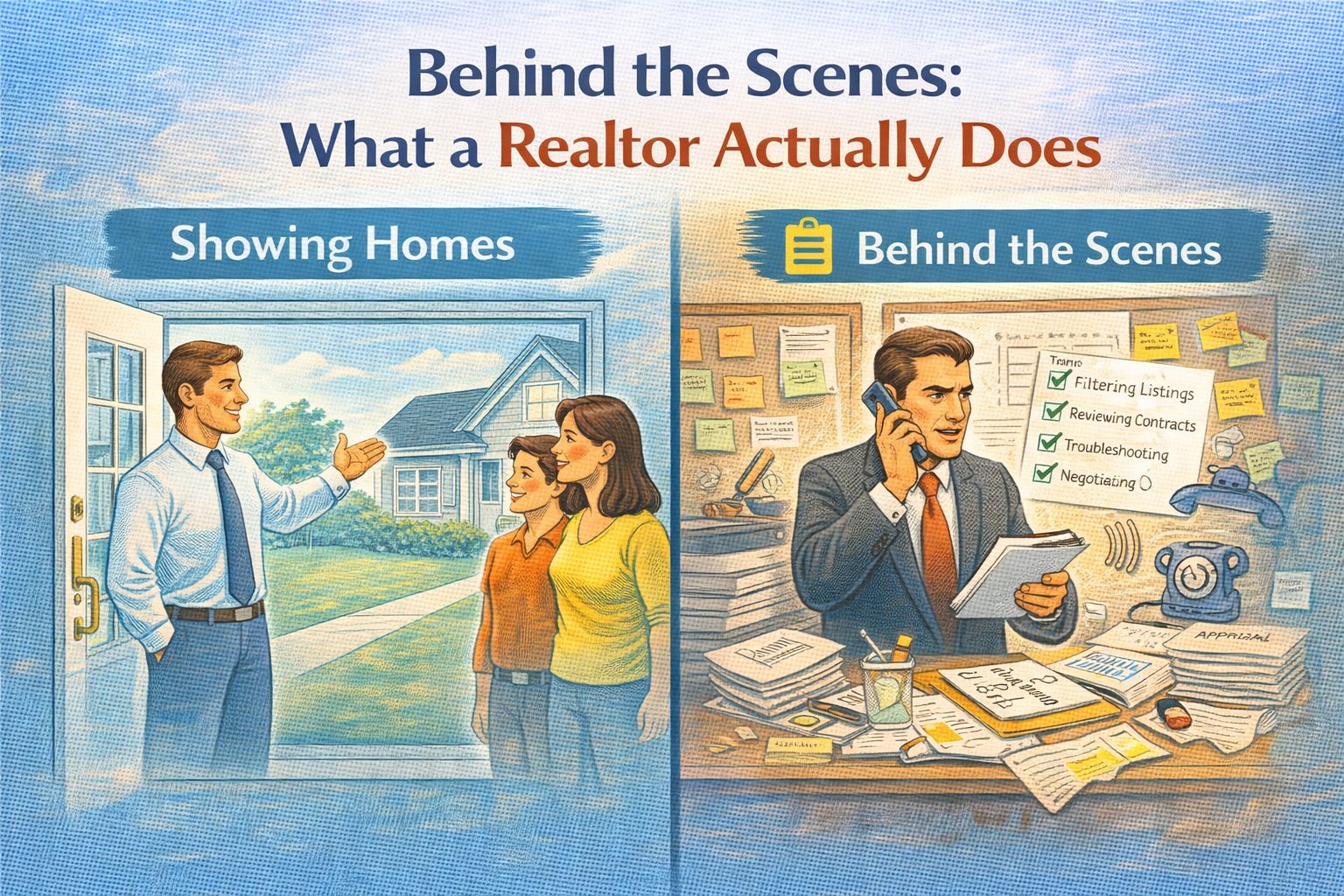
What Your Agent Does Between Contract and Closing (That You’ll Never See)

Once a home goes under contract, most buyers and sellers think the hard part is over.

In reality, this is where a great agent does the most important work—quietly, behind the scenes.

Here’s a look at what’s happening after the contract is signed and before you get the keys.

1. Managing Deadlines So Nothing Falls Apart

Every contract comes with strict timelines:

  • Inspection periods
  • Financing deadlines
  • Appraisal windows
  • Title and escrow milestones

Your agent tracks these daily. Miss one deadline and you could:

  • Lose your earnest money
  • Lose negotiating power
  • Lose the deal entirely

This isn’t automated—it’s monitored, adjusted, and followed up on constantly.

2. Coordinating Inspections (and Interpreting the Results)

An inspection report can be overwhelming. Your agent:

  • Helps schedule inspectors quickly
  • Reviews the report with a trained eye
  • Separates real issues from normal wear and tear
  • Advises what’s reasonable to request and what isn’t

The goal isn’t to “win”—it’s to protect you without killing the deal.

3. Navigating Repair Negotiations

This is where deals often get tense.

Behind the scenes, your agent is:

  • Crafting repair requests strategically
  • Advising on credits vs. repairs
  • Reading the other side’s motivation
  • Keeping emotions out of negotiations

A good agent knows when to push—and when to protect momentum.

4. Managing the Appraisal Stress

If an appraisal comes in low, your agent doesn’t panic.

They:

  • Review the appraisal for errors
  • Provide comparable sales when appropriate
  • Advise on renegotiation options
  • Coordinate conversations with lenders and agents

Most buyers and sellers never see how much problem-solving happens here.

5. Communicating Constantly (So You Don’t Have To)

Between contract and closing, there can be dozens of emails, calls, and follow-ups with:

  • Lenders
  • Title companies
  • Inspectors
  • Other agents

Your agent filters the noise and brings you:

  • Clear updates
  • Action steps when needed
  • Honest advice when decisions matter

6. Catching Small Issues Before They Become Big Ones

From survey problems to title issues to last-minute lender questions, your agent is watching for red flags early—because late surprises cost time, money, and peace of mind.

Most deals don’t fall apart because of one big issue. They fall apart because of small issues that weren’t handled early.

The Bottom Line

A smooth closing rarely happens by accident.

It’s the result of proactive communication, constant coordination, and experienced problem-solving—much of which you’ll never see.

And honestly? That’s how it should be.

If you’re buying or selling a home and want someone focused on protecting you after the contract is signed—not just getting it signed—I’m always happy to talk.

Thinking about buying or selling? Reach out anytime with questions—no pressure, just honest guidance.

Uncategorized December 15, 2025

Winter Maintenance

Tips to Keep Your Home Warm and Safe Winter brings chilly temperatures, shorter days, and weather that can put extra stress on your home. The good news? With a few simple maintenance steps, you can keep your home warm, safe, and efficient all season long. Here are the top winter home maintenance tips every homeowner should follow:

1. Seal Drafts to Keep Heat In Cold air can sneak in through windows, doors, outlets, and even attic access panels.

  • Add weatherstripping
  • Use caulking around window frames
  • Install door sweeps This not only keeps your home warm, it also lowers energy bills.

2. Service Your Heating System Before temperatures drop drastically:

  •  Schedule a furnace inspection
  •  Change air filters
  • Check for carbon monoxide leaks A well-maintained system runs better and lasts longer.

3. Protect Your Pipes From Freezing Frozen pipes are a winter nightmare.

  • Use pipe insulation in unheated areas
  • Let faucets drip during extreme cold
  • Keep cabinet doors open under sinks to circulate warm air This prevents costly bursts and water damage.

4. Inspect Your Roof & Gutters Snow and ice can add significant weight to your roof.

  • Clear debris from gutters
  • Check for loose shingles
  • Install gutter guards or heat cables if needed Preventing ice dams protects your home from leaks.

5. Test Smoke & Carbon Monoxide Detectors Winter means more time indoors and more use of heaters and fireplaces.

  • Install fresh batteries
  • Replace units over 10 years old
  • Test detectors monthly Safety first!

6. Reverse Ceiling Fans Switching your fan to run clockwise pushes warm air down and can save on heating costs.

7. Prepare for Power Outages Winter storms can knock out electricity.

  • Stock flashlights and batteries
  • Keep a case of bottled water
  • Have nonperishable foods
  • Charge power banks Being prepared reduces stress and keeps your family comfortable.

8. Clean Your Fireplace or Chimney If you use a wood-burning fireplace:

  • Schedule a chimney cleaning
  • Check the flue for blockages
  • Use a spark guard This prevents fire hazards and ensures proper ventilation.


Staying ahead on winter maintenance keeps your home warm, safe, and efficient — and protects the value of your property. If you need trusted local contractors for any of these tasks, reach out. I’m happy to provide recommendations!

Uncategorized December 8, 2025

Don’t Wait Until Spring — Smart Sellers Start Now

When most people think about selling their home, they picture the classic “spring market.” Flowers bloom, buyers come out, and the competition heats up. But here’s the truth: smart sellers don’t wait until spring. They start preparing — and even listing — right now.

If you want to maximize your selling power, timing matters. And the most strategic time to get ahead isn’t April… it’s today.

1. Less Competition = More Attention

In the spring, the market becomes crowded. Everyone lists at once, which means your home is just one of many.
But when you start preparing or listing earlier, inventory is lower — and that means your home stands out. Buyers have fewer options, and serious buyers are still shopping even in the winter months.

2. Buyers Today Are Motivated

People relocating for work, families needing more space now, or buyers who lost out during the summer and fall are still actively looking. These buyers are focused, qualified, and ready to write offers.

3. You Control the Timeline

Starting now doesn’t mean you have to move tomorrow. Smart sellers begin with:

  • A pre-listing consultation

  • A market analysis

  • A home prep plan

  • A timeline that fits your goals

This sets you up to launch strong — whether that’s next month or early spring.

4. Winter Buyers Are Serious

Window-shoppers wait for warm weather.
Real buyers tour homes in boots and coats.
Serious buyers = stronger offers.

5. You Get Ahead of Spring Rush

By doing prep work now — cleaning, repairs, decluttering, marketing prep — you avoid the stress and chaos of last-minute spring listing. When spring arrives, your home can hit the market polished and ready, before everyone else does.

6. Home Values Are Still Strong

In most areas, home prices remain solid and inventory remains tight. Starting now allows you to take advantage of current demand, rather than gambling on what the market will look like months from now.


The Bottom Line

You don’t need to wait until spring to get top dollar — in fact, you may earn more by starting now. Smart sellers plan ahead, prepare early, and position themselves to win in any season.

If you’re even thinking about selling, let’s talk. I can walk you through your home’s value, the best timing for your goals, and a strategy to help you get the strongest results.

Don’t wait for spring — start smart today.

Uncategorized December 1, 2025

Things to consider when choosing a lender

Getting prequalified is one of the very first steps in the home-buying process — and one of the most important. It sets the foundation for your entire search, determines what you can afford, and shows sellers you’re serious.

Just as important, the lender you work with should be willing to take the time to talk with you, answer your questions, and explain your options before ever pulling your credit. A quality conversation should always come before a credit check.

But not all prequalifications are created equal. Here are three key things to look for when you’re getting prequalified for a mortgage.

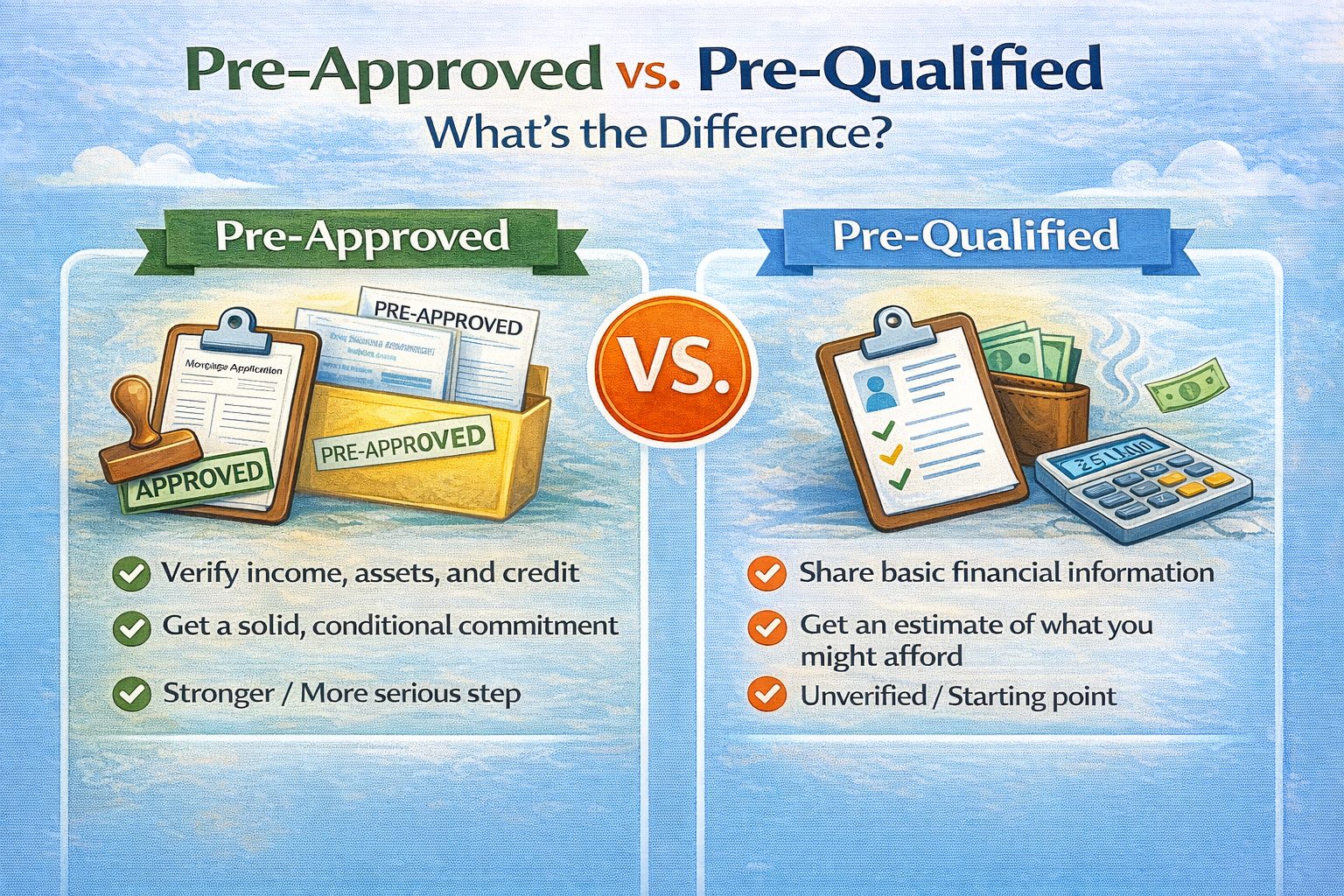
  1. Make Sure It’s a True Pre-Approval, Not Just an Estimate

There is a big difference between a quick online estimate and a true pre-approval. A pre-qualification is often based on basic information you provide, while a pre-approval requires the lender to actually review your financial documents.

A strong pre-approval should include:
• Verification of your income
• A review of your credit
• A look at your assets and debts
• A specific approved loan amount

Sellers take pre-approvals much more seriously than generic estimates. Having one in hand makes your offer stronger and gives you a real advantage in competitive situations.

  1. Your Lender Should Be Willing to Talk to You Before Pulling Your Credit

A credit pull is important, but a quality lender shouldn’t rush into it without first making sure you understand the process. They should be willing to have a conversation, answer your questions, and explain your options before running your credit.

This is your chance to ask about:
• Loan programs and down payment options
• Credit requirements
• Estimated interest rates
• Closing costs and timelines

If a lender isn’t willing to take the time to educate you upfront, that can be a red flag. Clear communication early on usually leads to a smoother experience later.

  1. Understand the Full Monthly Payment (Not Just the Loan Amount)

Many buyers focus only on the purchase price they are approved for, but your monthly payment is what really matters in everyday life.

When getting prequalified, ask your lender to clearly explain:
• Principal and interest
• Property taxes
• Homeowner’s insurance
• Possible HOA fees
• Estimated utilities

This gives you a realistic picture of what homeownership will actually look like for your budget. Being comfortable with the monthly payment is just as important as being approved for the total loan amount.

Final Thoughts

Getting prequalified isn’t just about getting a number — it’s about working with someone who educates you, respects your finances, and sets you up for success. Take your time, ask questions, and make sure you feel confident before moving forward.

If you’re thinking about getting started, I’m happy to connect you with trusted lenders and guide you every step of the way.

Uncategorized November 24, 2025

How to Become a Homebuyer in 3 Simple Steps 

Becoming a homeowner is one of the most rewarding financial decisions you can make—but if you’re new to the process, it can feel overwhelming. The good news? Buying a home doesn’t have to be complicated. With the right plan and the right guidance, anyone can move from “thinking about it” to “holding the keys.”

In this guide, you’ll learn how to become a homebuyer in three simple steps, even if you’re a first-time buyer.

Step 1: Get Your Financial Foundation Ready

The first step to buying a home is making sure your finances are organized. This helps you understand what you can afford and shows sellers you’re a serious, qualified buyer.

  1. Check Your Credit Score

Your credit score influences your mortgage options, your interest rate, and your buying power. The higher your score, the more you can save over time.

  1. Gather Your Financial Documents

Lenders typically ask for:

– Pay stubs

– W-2s or 1099s

– Tax returns

– Bank statements

– Proof of assets

Having these ready speeds up approval.

  1. Get Pre-Approved for a Mortgage

A true mortgage pre-approval (not just a quick pre-qualification) gives you:

– A clear price range

– Stronger negotiating power

– Proof you’re ready to buy

Sellers take pre-approved buyers far more seriously, especially in competitive markets.

Step 2: Work With a Trusted Real Estate Agent

Choosing the right real estate professional is one of the biggest factors in becoming a successful homebuyer. Your agent should be someone who educates you, protects your best interests, and communicates clearly.

Why You Need a Real Estate Agent

A great agent will:

– Guide you through the local market

– Help you avoid costly mistakes

– Provide data-driven insights on home values

– Craft strong offers that stand out

– Support you from search to closing

Buying a home is more than a transaction—it’s a partnership. The right agent makes the process smooth, stress-free, and empowering.

Step 3: Search for the Right Home and Make a Competitive Offer

Once your financing is in place and you have an experienced agent by your side, you’re ready to start your home search.

  1. Identify Your Needs

Create a checklist of:

– Must-haves

– Nice-to-haves

– Deal-breakers

This keeps your search focused and efficient.

  1. Understand Your Local Market

Depending on current conditions, you may need to:

– Act quickly

– Offer competitively

– Include an escalation clause

– Be flexible with terms like possession or inspection timelines

Your agent will help you navigate these strategies.

  1. Submit a Strong Offer

A competitive offer may include:

– A solid pre-approval

– Proof of funds

– Strategic pricing

– Clean, straightforward terms

In fast-moving markets, having a well-prepared offer can be the difference between winning or losing the home.

Final Thoughts: Becoming a Homebuyer Is Easier Than You Think

You can become a homeowner in just three steps:

  1. Prepare financially
  2. Work with the right real estate agent
  3. Find the right home and submit a strong offer

This journey is about more than buying a house—it’s about creating a future you’re excited about.

If you’re thinking about taking the first step, I’d love to guide you through the process. Whether you’re a first-time buyer or getting back into the market, I’m here to help you live your dreams, not just dream them.