

 Facebook
 X
X
 Pinterest
 Copy Link
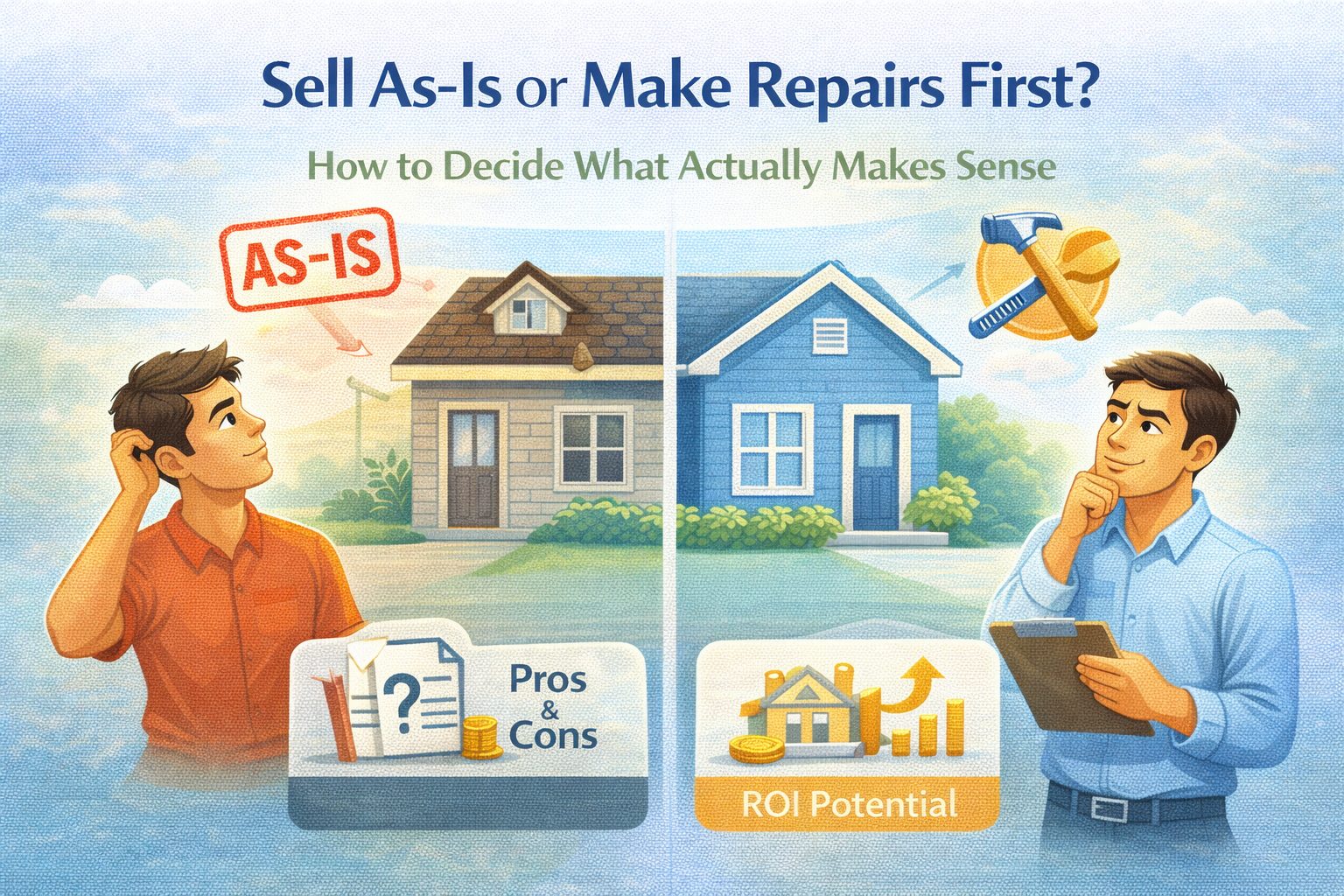
How to Decide What Actually Makes Sense
One of the most common questions sellers ask is:
“Should we just sell it as-is… or fix things first?”
The honest answer?
It depends — but not in the way most people think.
This isn’t about making your home perfect.
It’s about making strategic decisions that protect your time, stress level, and bottom line.
Let’s break it down.
What “As-Is” Really Means
Selling a home “as-is” doesn’t mean:
-
You can hide issues
-
Buyers won’t inspect
-
You’re protected from negotiations
It simply means you’re stating upfront that you’re not planning to make repairs.
Buyers can still:
-
Do inspections
-
Ask for concessions
-
Negotiate based on condition
“As-is” is a positioning choice — not a shield.
When Selling As-Is Makes Sense
Selling as-is can be smart if:
-
The home needs significant updates
-
You don’t want to manage contractors
-
You’re relocating quickly
-
It’s an estate or inherited property
-
You prefer convenience over maximizing every dollar
In some situations, pricing correctly and being transparent brings strong offers without the hassle of renovation.
When Making Repairs Is Worth It
Sometimes small improvements create big returns.
Examples:
-
Fixing obvious deferred maintenance
-
Repairing a roof leak
-
Addressing safety issues
-
Updating worn flooring or paint
Buyers often overestimate repair costs in their minds.
Visible problems can scare them more than the actual expense would justify.
Simple fixes can:
-
Increase buyer confidence
-
Reduce inspection negotiations
-
Improve appraisals
-
Shorten days on market
The Mistake to Avoid
The biggest mistake isn’t selling as-is.
And it isn’t making repairs.
It’s over-improving for the neighborhood.
You don’t want to install luxury finishes in a mid-range market and expect full return. Improvements should align with market expectations — not HGTV standards.
The Smart Approach
Before deciding, the right move is:
-
Evaluate current condition honestly
-
Compare similar homes that sold recently
-
Estimate realistic repair costs
-
Determine potential return on investment
Sometimes the best strategy is:
-
Fix a few key items
-
Leave cosmetic updates alone
-
Price correctly from the start
Every property is different. Every seller’s timeline and goals are different.
Bottom Line
Selling as-is isn’t lazy.
Making repairs isn’t mandatory.
The goal isn’t perfection.
The goal is positioning your home to sell smoothly and strategically.
The right plan depends on:
-
Your timeline
-
Your budget
-
Your tolerance for stress
-
Your market
And when those factors align with a clear strategy, selling becomes much more predictable.
If you’re wondering what makes the most sense for your specific home, that conversation starts with clarity — not pressure.
