

 Facebook
 X
X
 Pinterest
 Copy Link
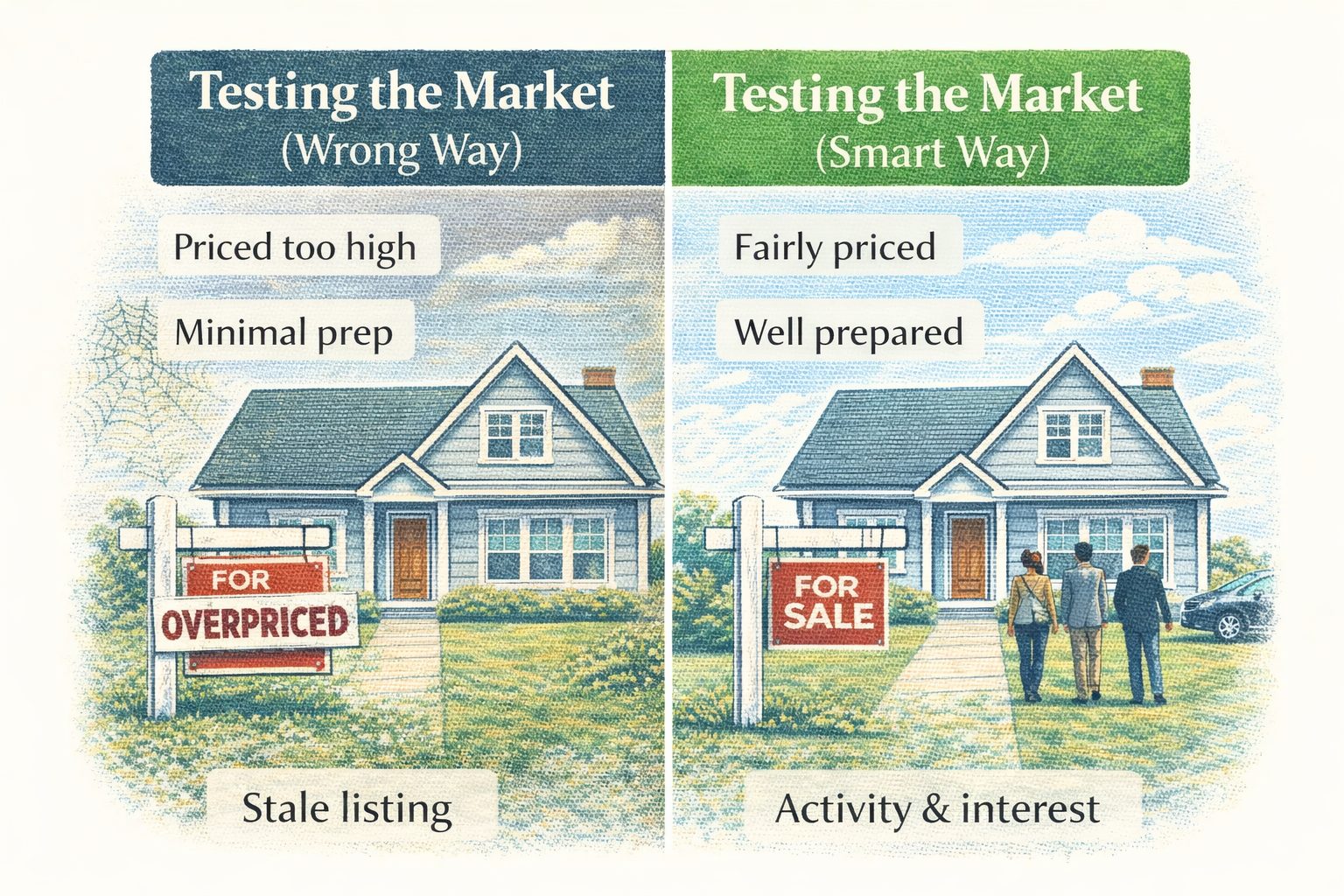
It’s a common thought:
“Let’s just put it on the market and see what happens.”
On the surface, that sounds harmless.
No pressure. No commitment. Just testing the waters.
But in real estate, how you enter the market matters more than most people realize.
The first impression your home makes can shape everything that follows.
What “Testing the Market” Usually Means
When sellers say they want to test the market, it often looks like:
- Pricing a little higher “just to see”
- Not fully preparing the home
- Being open to selling, but not fully committed
There’s nothing wrong with wanting flexibility — but the strategy behind it matters.
Mistake #1: Starting Too High
The most common approach is:
“We can always come down later.”
And while that’s technically true, here’s what happens:
- Serious buyers skip over the listing
- The home sits longer than expected
- Price reductions become necessary
The longer a home sits, the more buyers start to wonder what’s wrong — even if nothing is.
Mistake #2: Missing the Initial Momentum
Every listing has a window where it gets the most attention.
That early period is when:
- Buyers are most excited
- Agents are watching closely
- Showings are most active
If the home isn’t positioned correctly during that time, it’s hard to recreate that same level of interest later.
Mistake #3: Incomplete Preparation
Testing the market sometimes leads to cutting corners:
- Skipping small repairs
- Minimal staging
- Lower-quality photos
But buyers compare your home to everything else online.
Even small details can influence how they perceive value.
Mistake #4: Mixed Signals to Buyers
Buyers can feel uncertainty.
If a seller seems unsure, it can come across as:
- Less urgency
- Less flexibility
- Less willingness to negotiate
That can lead to fewer offers — or weaker ones.
So What’s the Better Approach?
You can test the market — but do it strategically.
✔ Price With Purpose
Not too high, not too low — but positioned to attract attention and activity.
✔ Prepare Like You’re Serious
Even if you’re testing, present the home at its best:
- Clean
- Maintained
- Professionally marketed
✔ Watch the Market Response
The market gives feedback quickly:
- Showings
- Interest
- Offers (or lack of them)
That data tells you exactly where you stand.
✔ Be Ready to Adjust
Flexibility is key.
Small adjustments early can prevent bigger ones later.
Bottom Line
Testing the market isn’t a bad idea.
But how you do it makes all the difference.
The goal isn’t just to “see what happens.”
It’s to enter the market in a way that creates opportunity — whether that leads to a sale now or helps you prepare for the right timing later.
