

 Facebook
 X
X
 Pinterest
 Copy Link
If you’re thinking about buying a home, one of the first terms you’ll probably hear is “pre-qualified.”
It sounds official and reassuring — but many buyers don’t fully understand what it means or how it differs from other steps in the mortgage process.
Knowing the difference can help you shop smarter and avoid surprises when it’s time to make an offer.
What Pre-Qualified Means
Getting pre-qualified is usually the first step in talking with a lender.
During this step, you typically provide basic information about:
-
Your income
-
Your debts
-
Your credit estimate
-
Your employment
Based on that information, the lender gives you a rough idea of what you may be able to afford.
Think of it as an early financial snapshot, not a final approval.
It helps you begin the home search with a general price range in mind.
What Pre-Qualified Does Not Mean
Here’s where confusion often happens.
Being pre-qualified does not mean your loan is guaranteed.
At this stage, lenders usually have not verified:
-
Tax returns
-
Bank statements
-
Employment records
-
Full credit reports
Those things typically happen later in the loan process.
So while pre-qualification is helpful, it’s not the same as full loan approval.
Why It Still Matters
Even though it’s an early step, pre-qualification still provides some important benefits.
It can help you:
-
Understand a comfortable price range
-
Start conversations with lenders
-
Prepare for the next steps in financing
Most importantly, it helps buyers begin the process with realistic expectations.
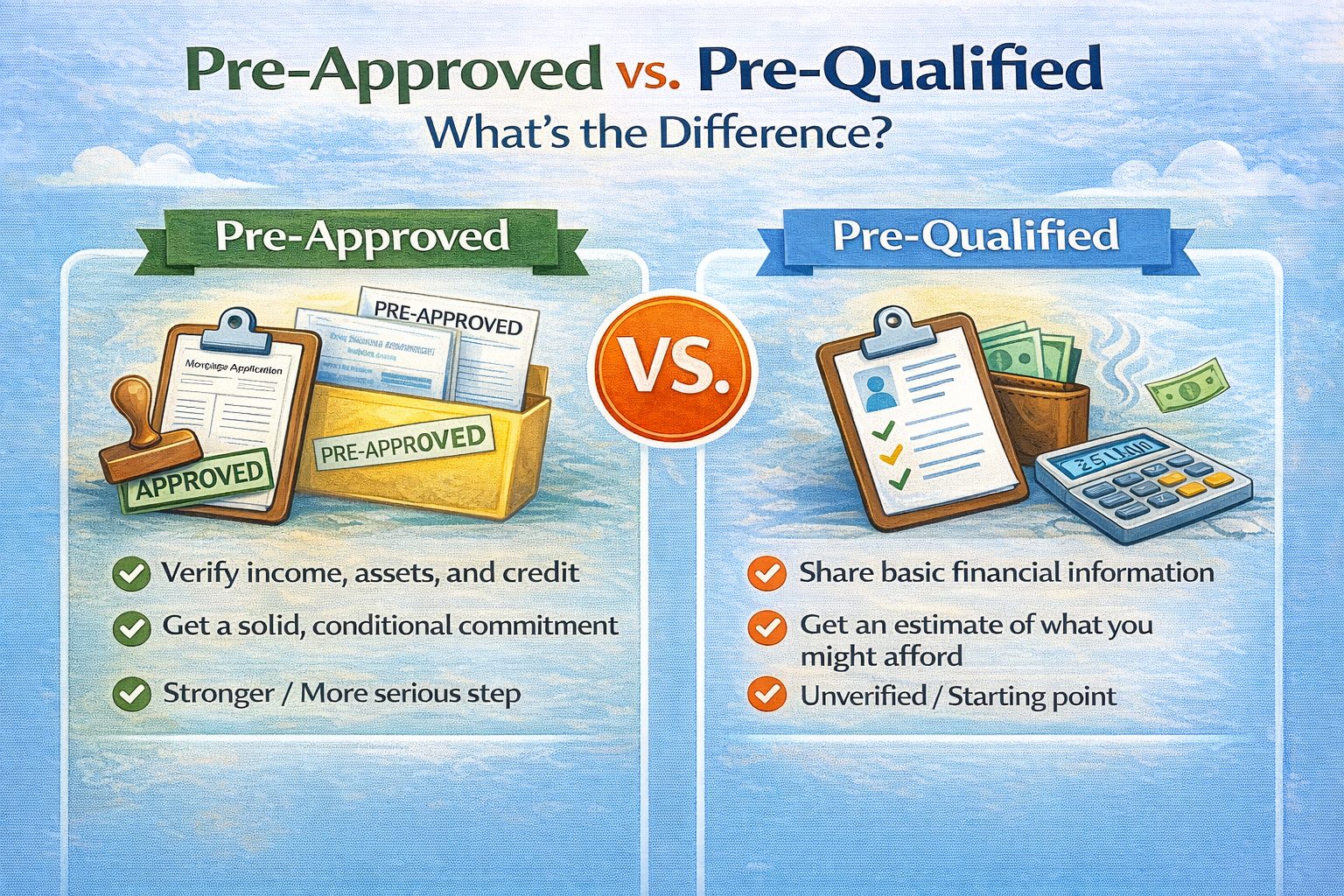
Pre-Qualified vs. Pre-Approved
You may also hear the term pre-approved, which is usually a stronger step.
Pre-approval typically involves:
-
Verified financial documents
-
A full credit review
-
A more accurate borrowing amount
When buyers are pre-approved, sellers and agents often see their offers as more serious and reliable.
The Bottom Line
Pre-qualification is a helpful starting point, but it’s just that — a starting point.
The real goal is to move toward stronger financial preparation so that when the right home appears, you’re ready to act confidently.
Buying a home is a big step, and understanding the process early makes everything smoother along the way.
