

 Facebook
 X
X
 Pinterest
 Copy Link
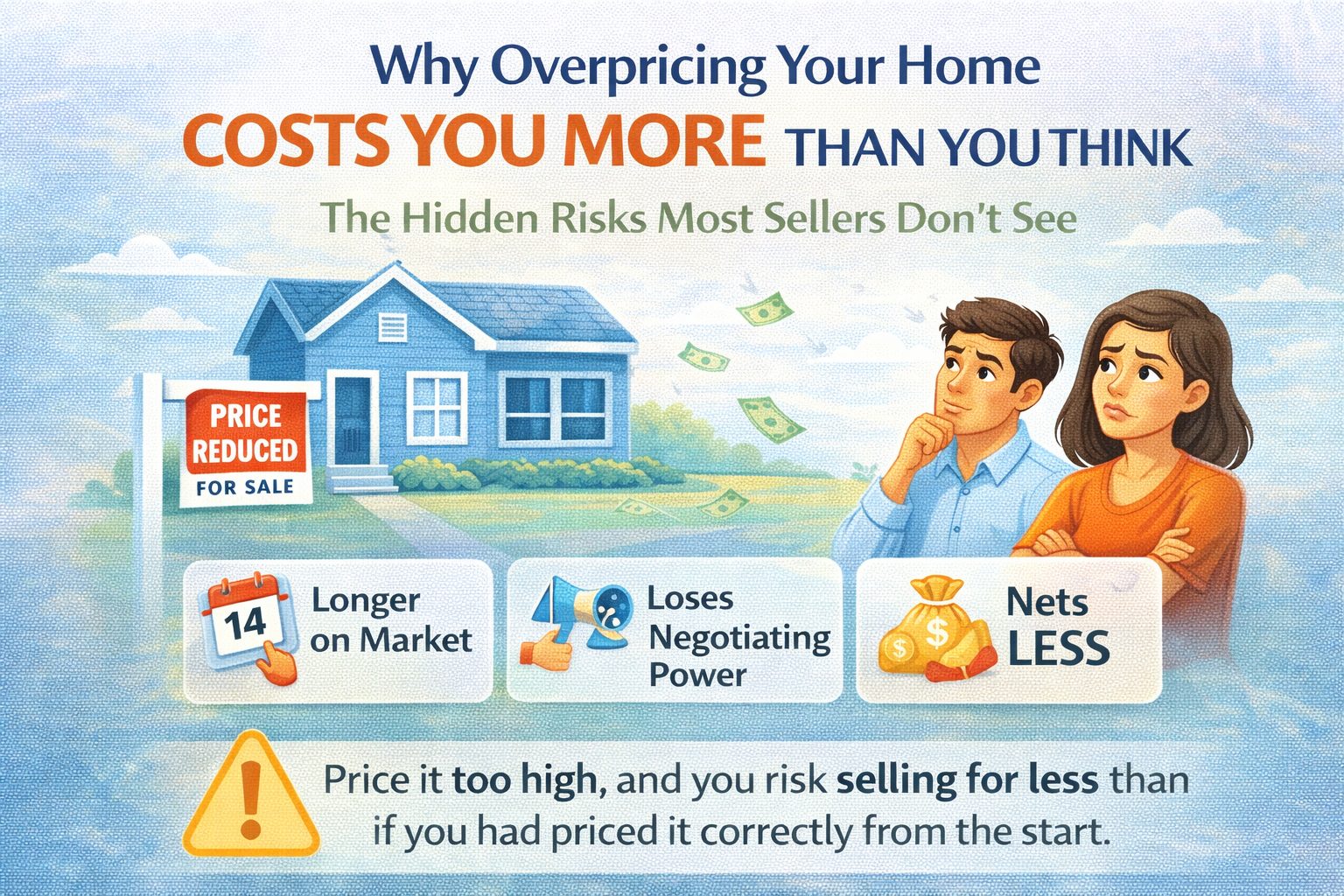
The Hidden Risk Most Sellers Don’t See
It’s completely understandable.
When you decide to sell your home, your first instinct might be:
“Let’s list it a little high and see what happens.”
After all, you can always lower the price later… right?
Technically, yes.
Strategically? That’s where things get expensive.
Let’s walk through why overpricing often backfires — and how to avoid it.
The First 14 Days Matter Most
When a home hits the market, that’s when it gets the most attention.
-
New listing alerts go out
-
Active buyers schedule showings
-
Agents bring their serious clients
This is your peak visibility window.
If the home is priced correctly, it attracts:
-
Strong traffic
-
Competitive interest
-
Potential multiple offers
If it’s overpriced, buyers hesitate — and hesitation is costly.
Buyers Compare Everything
Today’s buyers are informed.
They:
-
See every comparable sale
-
Track price reductions
-
Watch days on market
If your home is priced above similar properties, they won’t “fall in love and overpay.”
They’ll move on.
And here’s the danger:
The longer your home sits, the more buyers start asking,
“What’s wrong with it?”
Even if nothing is wrong.
Price Reductions Send a Signal
When a home reduces price, it doesn’t feel like a fresh opportunity.
It feels like a stale listing.
Buyers often assume:
-
There were no offers
-
Inspections fell through
-
Something scared people away
Instead of gaining leverage, you lose negotiating power.
Overpricing Can Cost You Real Money
Here’s the part most sellers miss:
Homes that sit on the market longer often sell for less than they would have if they were priced correctly from the beginning.
Why?
Because:
-
Momentum fades
-
Buyer urgency disappears
-
Negotiating leverage shifts
In many cases, strategic pricing from day one nets more — not less.
The Right Strategy Isn’t “Low.” It’s Smart.
Pricing correctly doesn’t mean underpricing.
It means positioning your home:
-
In line with the market
-
Based on real comparable data
-
Aligned with buyer expectations
The goal isn’t to “test the market.”
The goal is to create activity.
Activity creates competition.
Competition protects value.
Bottom Line
Overpricing feels safe.
But in reality, it’s often the riskiest move a seller can make.
The strongest position isn’t starting high and chasing the market down.
It’s entering the market with confidence, data, and strategy from day one.
If you’re thinking about selling and want to know what your home would realistically command in today’s market — that’s a conversation worth having before a sign goes in the yard.
